

Oct 22, 2026 Why You Don’t Need Years of Therapy to Make Meaningful Life Changes
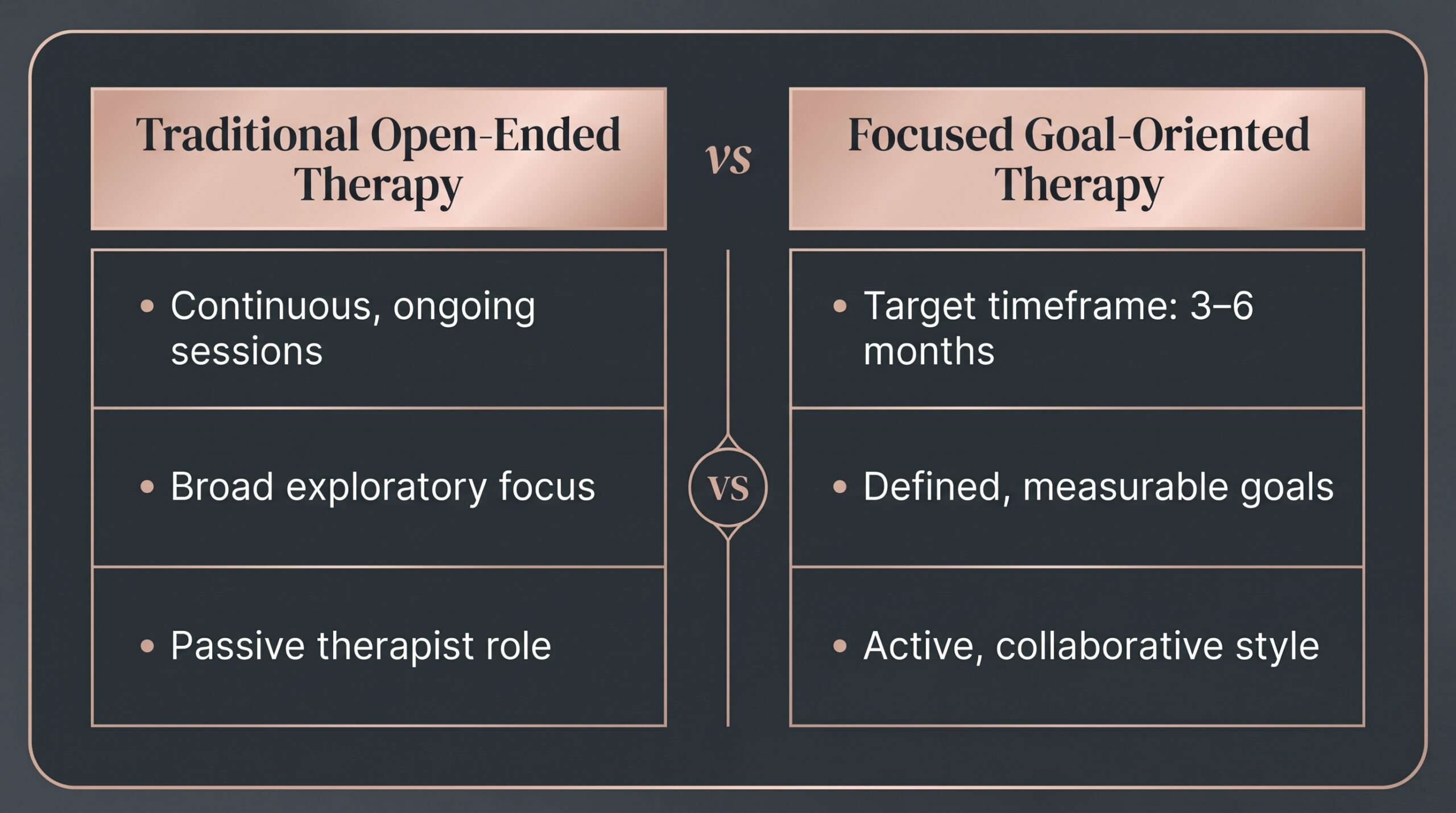
There is a widespread misconception that entering psychotherapy requires a multi-year, open-ended commitment centered entirely on uncovering past childhood events. For capable, self-aware adults facing a specific life challenge, job shift, or major decision, that traditional model often feels unnecessary, inefficient, and misaligned with their goals.
If you are already functioning well in your day-to-day life but need professional guidance to navigate a specific hurdle, you don’t need years on a couch. You need focused, goal-oriented psychotherapy designed to produce practical, lasting results within a clear timeframe.
The Power of Focused, Time-Limited Therapy
High-functioning adults—such as business owners, skilled professionals, managers, and active retirees—typically possess strong judgment, psychological insight, and emotional awareness. They do not need a therapist to manage chronic crises; they need an experienced collaborator to help them clarify choices, remove obstacles, and build concrete action plans.
Here is why a goal-oriented model is so effective:
- Defined Objectives: We establish what success looks like right from the start.
- Active Collaboration: Sessions are structured, interactive, and engaging—not passive or detached.
- Integrative Evidence-Based Tools: By combining Cognitive Behavioral Therapy (CBT), Acceptance and Commitment Therapy (ACT), and Internal Family Systems (IFS), we target specific challenges directly.
- Accountability: You maintain ownership of your personal growth and execute agreed-upon strategies between sessions.
What Does the 3-to-6-Month Timeline Look Like?
Most clients complete their primary therapeutic goals within 3 to 6 months, starting with weekly sessions to build momentum and transitioning to less frequent meetings as clarity takes hold.
- Phase 1: Alignment & Goal Setting (Weeks 1–3): Clarify core challenges, evaluate options, and set measurable targets.
- Phase 2: Execution & Obstacle Removal (Weeks 4–12): Apply cognitive strategies, adjust behavioral patterns, and test new approaches in real time.
- Phase 3: Integration & Consolidation (Months 4–6): Solidify changes, establish ongoing habits, and plan for future transitions.
After concluding therapy, periodic “check-in” or fine-tuning sessions are available as needed to keep you on track.
Focused Psychotherapy in California
You have spent years developing professional competence; applying that same focus to your personal growth yields rapid, transformative results.
Serving clients in-person at my Petaluma office—convenient to Santa Rosa, Rohnert Park, Novato, and Sonoma—and statewide via secure teletherapy.
Get practical, focused guidance without the indefinite commitment.